How to Pronate on Your Tennis Serve
3 video lessons
The forearm rotation behind effortless serve power.
Quick answer & tips ▾Hide ▴
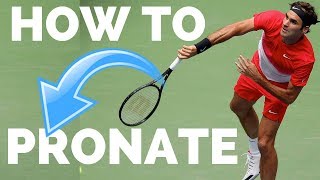
Pronation is the natural inward rotation of the forearm as the racquet swings up to the ball and through contact on the serve. It turns the racquet from an edge-on position into a square face at contact, and it is a big part of where easy racquet-head speed comes from.
You need a continental grip for pronation to happen. With a forehand grip the face is already square, so the forearm has nothing to rotate. Practice by leading with the edge of the racquet on the way up and letting the forearm rotate through contact, without forcing the wrist.
Key tips
- Use a continental grip so the forearm can rotate.
- Swing up edge-first, then let the face turn to the ball.
- Keep the arm loose; pronation happens, you do not force it.
- Shadow swing slowly before hitting balls.
FAQ
- Do you pronate on every serve?
- Yes. The flat, slice and kick serves all use forearm pronation. What changes is the direction of the swing and where you brush the ball, not whether the forearm rotates.
- Why does my serve feel like a push?
- Often it is a forehand grip with no pronation, so the racquet face is square from the start and you push the ball. Switching to a continental grip lets the racquet accelerate and turn through the ball.
10:22Serve
How To Pronate on Your Tennis Serve - Tennis Serve Pronation
Top Tennis Training - Pro Tennis Lessons

16:29Serve
Tennis Serve Pronation Explained For Flat, Slice & Topspin Serves
Feel Tennis Instruction

10:38Serve
How to Hit The Perfect Slice Serve In 3 Steps (with PRONATION)
RacquetFlex
Related questions


Coming soon
Get your game reviewed by a pro
Send a clip, get a personal breakdown from a coach.
Notify me