Tennis Court Surfaces Explained
7 video lessons
How clay, grass and hard courts change the bounce and the game.
Quick answer & tips ▾Hide ▴
The surface decides how fast the ball comes through and how high it bounces. Clay is the slowest: the ball grips, kicks up high and rallies run long, which rewards topspin, patience and sliding. Grass is the fastest and lowest: the ball skids, so big serves, slices and net play win more points.
Hard courts sit in between, with a true, medium-high bounce, and most recreational courts are hard. At the majors, the Australian Open and US Open are hard, Roland Garros is clay and Wimbledon is grass. Indoor carpet and artificial grass courts exist too, and usually play fast.
Key tips
- On clay, add net clearance and topspin and expect more balls back.
- On grass, stay low, shorten your backswing and use the slice.
- Hard courts are toughest on joints, so wear cushioned hard-court shoes.
- Clay courts need clay or all-court shoes with a herringbone sole.
FAQ
- What is the fastest tennis surface?
- Grass, followed by fast indoor hard courts. Clay is the slowest.
- Which surface is best for beginners?
- Clay is easiest on the body and gives more time, but hard courts are the most common and give the most predictable bounce.
- Why is clay slower than grass?
- The loose clay surface grips the ball and takes speed off, and the ball bounces higher. Grass is slick, so the ball keeps its speed and stays low.
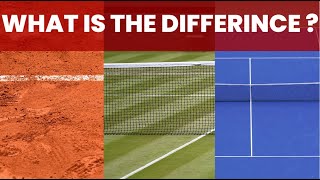
What Is The Difference Between Clay, Grass and Hard Court Surfaces ?
Tennis Lab
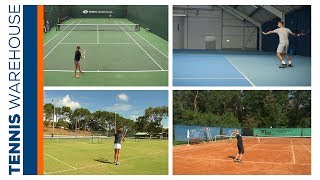
Tennis Court Surfaces Explained!
Tennis Warehouse

Surface Sensitivity: The Different Tennis Surfaces and How They Affect the Players
Tennis Banana

Why Tennis Surfaces Matter More Than You Think!
QualityShot Tennis

ASICS Tennis | Patrick Mouratoglou Coaching Series: Hard vs Clay
ASICS

What's the difference between clay and grass court tennis? | Sci Guide (Ep 29) | Head Squeeze
BBC Earth Science

Why tennis slowed down on purpose
Tifo Sports by The Athletic
Related questions





Coming soon
Get your game reviewed by a pro
Send a clip, get a personal breakdown from a coach.
Notify me