How to Choose Tennis Balls
4 video lessons
Match the ball to your court, level and how often you play.
Quick answer & tips ▾Hide ▴
Regular duty balls have a thinner felt suited to clay and indoor courts, while extra duty balls have thicker felt that lasts longer on hard courts. Pressurized balls play livelier but go flat within a few sessions; pressureless balls stay consistent for a long time and suit ball machines and practice baskets.
Kids and new players often learn faster with low-compression balls (red, orange and green dot), which bounce lower and slower. For regular match play, a quality pressurized ball on the right felt for your surface is usually the best value.
Key tips
- Use extra duty balls on hard courts.
- Pick pressureless balls for practice baskets and machines.
- Use low-compression balls for kids and beginners.
- Open a fresh can for matches; old balls play slow and flat.
FAQ
- How long do tennis balls last?
- Pressurized balls start losing bounce once the can is opened and often feel flat after a few sessions. Pressureless balls last much longer but feel heavier.
- What is the difference between regular and extra duty balls?
- Extra duty balls have thicker felt that holds up on abrasive hard courts. Regular duty balls have thinner felt for clay and indoor courts.

PSA: Have the right (tennis) balls when you get on the court (tennis balls explained) - VLOG #723 🎾
Tennis Warehouse

You’re using the WRONG tennis ball!
Essential Tennis - Lessons and Instruction for Passionate Players
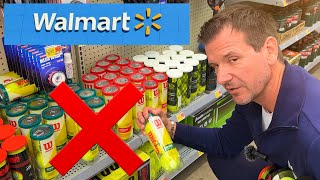
Tennis Balls You Should NOT Buy From Walmart (and what to get instead)
Intuitive Tennis

Every Tennis Ball Ranked Worst to Best
Scott Plays Tennis 🎾
Related questions



Coming soon
Get your game reviewed by a pro
Send a clip, get a personal breakdown from a coach.
Notify me